South-South Technology Cooperation: The Case of Brazil and China’s Wind Industry
South-South Technology Cooperation: The Case of Brazil and China’s Wind Industry In a piece prepared especially for the United Nations Department of Economic and Social Affairs (UN DESA), the authors look at the “South-South” relationship between China and Brazil to understand the extent, drivers and lessons from their technology cooperation. By Hyosun Bae & Zoraida Velasco, 7th May, 2014 Cooperation in the fields of technology is under the constant pressure of global competition. Countries are finding themselves in a race to increase their innovation capacity. This is particularly the case for emerging markets like Brazil and China. This race includes significant multi-dimensional commitments from government towards industry development and collaboration in an effort to develop mutually benefitting opportunities. Fully utilizing their growth in financial and technological capacity, Brazil and China have expanded their collaboration on renewable energy technology. Technology cooperation is a way to develop opportunities for reciprocal knowledge-sharing and investment. Through the use of case study and literature review, this paper analyses the bilateral cooperation between Brazil and China on wind power technology. It focuses on the public and private sectors’ research and development (R&D) of wind technology between the two countries. The extent and the outcomes of wind ...
Read More
Read More
Human rights law and the cultural barriers in Islamic states
Human rights law and the cultural barriers in Islamic states An overview of the Islamic state’s capacity to adopt the current human rights norms – the author holds that the globalization of human rights remains ineffective in transcending cultural barriers. Only when the philosophical ideology is translated into different cultures, as opposed to a more positivist approach, can the gap between globalized human rights and different nations be further mitigated. By Shafeea Riza, 8th February 2014 1. Introduction In an increasingly globalising world, where international human rights law plays a dominating role in global politics, one cannot help but wonder whether globalisation of human rights law effectively translates into the domestic realms of the receiving state. I ask this question in relation to Islamic states. Islamic states have responded to the international human rights law norms in different ways. Despite the “universal” aspect of these human rights, and its somewhat adoption by Islamic states, what transpires foremost is the tension between these rights and Islamic traditions.[1] Although there is general consensus of the international human rights law among Islamic states, insistence on holding on to Islamic values appear to be pre-dominant.[2] Such an observation begs the question asked at the ...
Read More
Read More
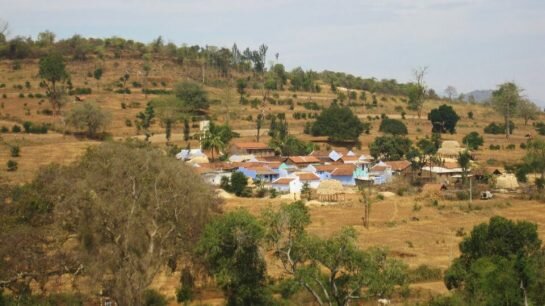
Challenges of grass root rural development in Tamil Nadu
Challenges of grass root rural development in Tamil Nadu The challenges of grass root rural development in Tamil Nadu Case study of D. P. Doddy D.P. Doddy, Erode, Tamil Nadu Looking at the adverse effects of pesticide use on health and farmer yields in Erode, Tamil Nadu state in India, the author highlights the needed measures to bridge the gap between the remedies available to the government, NGOs and civil society on one hand, and the sustainable options for the farmers on the other. By Camille Maubert, 23rd November 2013 India’s outstanding economic development following the Green Revolution (1960s) was characterized by a remarkable increase in agricultural production. In the past decades, India’s crop yield was multiplied by four through the use of enhanced crop varieties, fertilizers, pesticides and other chemicals. However, despite such success on the global scale, concerns are emerging at the micro level regarding the sustainability if intensive agricultural exploitation. The biggest challenge facing farmers is the dramatic decrease in soil fertility. Indeed, after five decades of intense farming, some challenges have become alarmingly recurrent. These include disturbances in soil reaction, development of nutrient imbalances in plants, increased vulnerability to pests and diseases, decrease in soil life ...
Read More
Read More