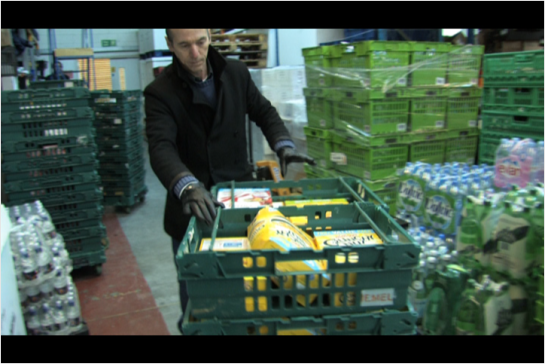
Research Project: Best Before, the London food revolution
Research Project: Best Before, the London food revolution In this post, documentary filmmaker Ben Mann brings us his latest work on the current food revolution taking place in London. By Ben Mann, 27 February, 2012 Best Before is about the current food revolution in London and the reasons why it is happening. Since it is a revolution that few people are aware of, we wanted to draw a picture of what it constitutes of, and how and why it is happening. The 2007/2008 Food Price Crisis pushed an extra 800 million people around the world into chronic hunger, as a result of the price for basic foods drastically increasing. This was so dramatic a shock since many developing countries are net importers of staple crops. Here in the UK we import about 40% of the food we consume[i]. With increasing oil volatility, the food system in London and the UK is vulnerable to increasing prices of basic foods. Food prices are expected to double across the world by 2030[ii], and food prices have already risen 6% in the UK in the last year[iii]. London is the perfect showcase for the food system in the UK. A handful of supermarkets dominate ...
Read More
Read More
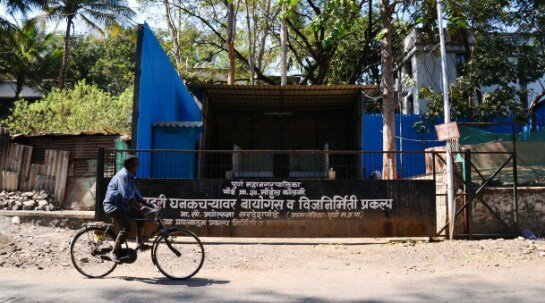
Research Project – Pune: A (Nearly) Waste-Free City
Research Project – Pune: A (Nearly) Waste-Free City This post is the tenth in a series sharing findings from a research project Sam Kornstein and Paul Artiuch are working on throughout the month of January. Paul Artiuch and Samuel Kornstein are graduate students at the MIT Sloan School of Management. Throughout the month of January they are in India researching market-oriented approaches to reducing agricultural food waste. Part IX can be accessed here: Four Problems with India’s Food Supply Systems By Samuel Kornstein and Paul Artiuch Note: This post was originally published on the MIT Public Service Center website and subsequently reproduced on Sam Kornstein’s personal blog somethingsbrewing.com. We are greatful to Sam and Paul for sharing their experience and research project with InPEC. All photographs included in these series are courtesy of Sam Kornstein. January 26, 2012 Until now, we’ve spent the majority of our time exploring upstream agricultural supply chains – learning about what happens to food between farms and markets, before it reaches end consumers. Unlike many western countries, Indian consumers waste remarkably little food, as a use is found for nearly all left-overs and food scraps. However, this doesn’t mean that there’s no waste, and Pune, ...
Read More
Read More
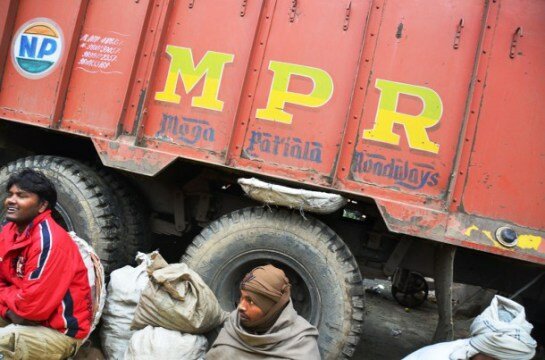
Research Project: Four Problems with India’s Food Supply Systems
Research Project: Four Problems with India’s Food Supply Systems This post is the ninth in a series sharing findings from a research project Sam Kornstein and Paul Artiuch are working on throughout the month of January. Paul Artiuch and Samuel Kornstein are graduate students at the MIT Sloan School of Management. Throughout the month of January they are in India researching market-oriented approaches to reducing agricultural food waste. Part VIII can be accessed here: Smaller Markets in Rajasthan By Samuel Kornstein and Paul Artiuch Note: This post was originally published on the MIT Public Service Center website and subsequently reproduced on Sam Kornstein’s personal blog somethingsbrewing.com. We are greatful to Sam and Paul for sharing their experience and research project with InPEC. All photographs included in these series are courtesy of Sam Kornstein. January 24, 2012 We’ve spent the past three weeks in India researching agricultural supply chains to see if we could uncover the reasons why an estimated 30-40% of food grown in the country goes to waste. Over this time we’ve had a chance to speak with many stakeholders to gain their perspectives on the issue. Not surprisingly, the landscape that’s emerged is quite complex. At the risk ...
Read More
Read More